The Legal Steps for Drilling a Borehole
Water Consumption Without a Pool
Most households stay within limits for water usage. However, larger households, particularly those with 7 or more people, can approach the 50 kL registration threshold. It’s important for these households to monitor their consumption to avoid exceeding this limit.
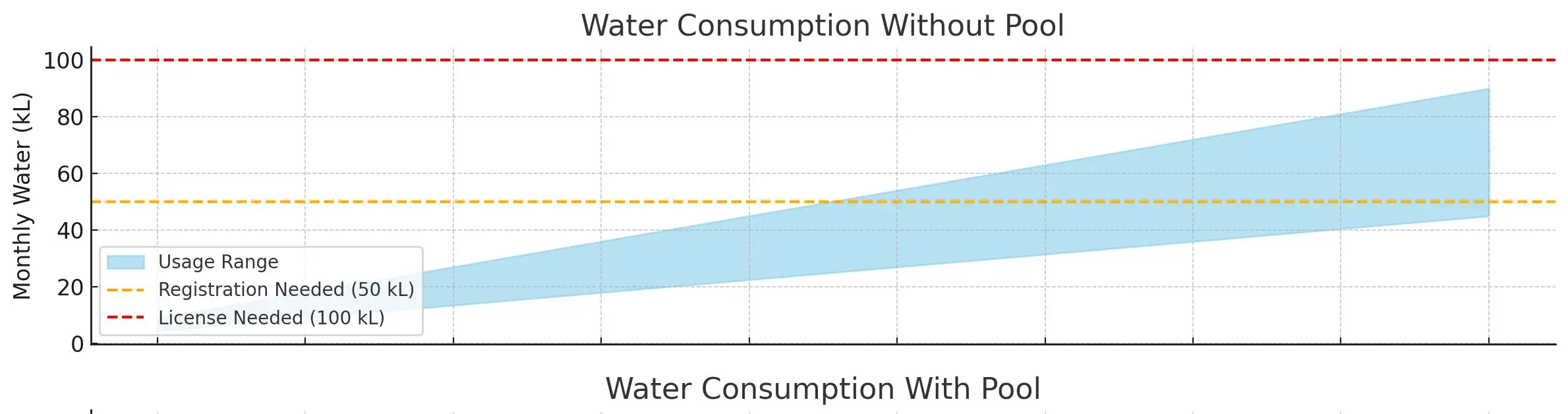
Water Consumption With a Pool
Households with pools tend to quickly exceed the 50 kL mark. For example, households with 10 or more people can exceed 100 kL, which would require obtaining a water license. Pool owners should be aware of their consumption to ensure they stay compliant with regulations.

The City of Johannesburg (CoJ) has outlined a clear legal process for residents wishing to drill a borehole on their property. These steps help ensure that drilling is done safely and in compliance with local regulations.
- Written Notice of Intent: Submit a written notice of intent to drill a borehole on your property.
- Environmental Assessment: Complete an environmental assessment to evaluate potential impacts.
- Hydrogeological Study: Conduct a hydrogeological study by a registered hydrogeologist before drilling.
- City Approval: Obtain written consent from the CoJ as per Section 14(1)(b) of the CoJ’s Land Use Scheme.
- Stakeholder Notification: Notify relevant stakeholders like City Power, Johannesburg Water, Emergency Services, and the Johannesburg Metropolitan Police Department.
- 14-Day Notice: Provide written notice to the CoJ 14 days prior to drilling.
- Dolomitic Areas: Be aware that drilling in dolomitic areas is prohibited to prevent infrastructure damage or environmental hazards.
- Permit Requirements: Obtain the necessary permits for drilling on your property.
The process is essential for ensuring that drilling is done responsibly, especially to avoid risks such as sinkholes or damage to existing infrastructure.
Additional Considerations:
- Cost: Drilling a borehole on private property can cost between R20,000 to R60,000, while agricultural boreholes range from R80,000 to R150,000.
- National Groundwater Records: As of October 2024, there are over 282,630 borehole records in South Africa, with 80,000 to 100,000 boreholes being drilled annually.
For more information on regulations and costs, be sure to consult the relevant authorities and service providers before proceeding with any borehole drilling project.
Other Cities' Regulations:
Tshwane
- Borehole Registration: Boreholes producing less than 50 kilolitres per day don't need to be registered, but those producing more than 50 kilolitres require registration or a water license.
- Dolomitic Areas: Borehole drilling is prohibited in the dolomitic suburbs of Bronberrick and Eldoraigne.
Cape Town
- Borehole Application: Applications must be submitted 14 days prior to installation and registered after installation.
- Documents Required: Provide proof of identity, proof of address, and a drainage layout plan showing the extraction point.
- Installation Time: Drilling usually takes 1-3 days, with additional time for permits and registration.
Borehole Drilling
Looking for professional borehole drilling services? Get in touch now to learn more about our offerings.
Learn MoreWater Pump Installation
Need a water pump installed? Click below for more details and to get started with your service request.
Learn More